
Why Salt Has Been Considered Precious Throughout History
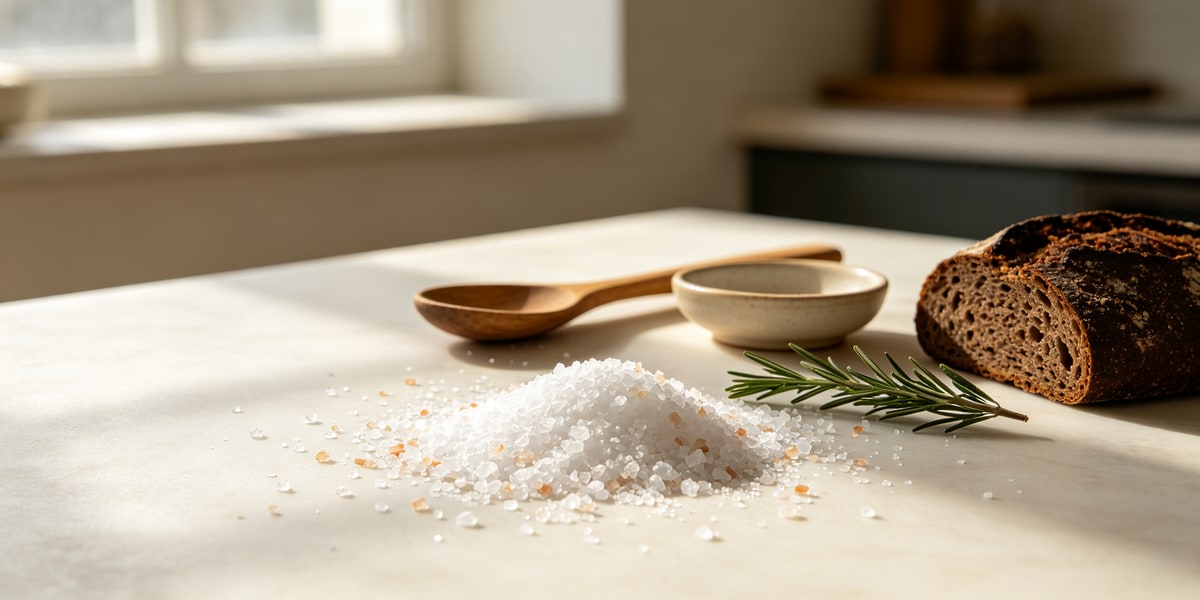
Walk into any grocery store today and you can buy a full pound of salt for pocket change. It's so cheap and so ubiquitous that it's easy to forget salt used to be one of the most valuable substances a human being could own.
For most of history, salt drove economies, funded empires, and started wars. Here's why a mineral that costs almost nothing today was once considered nearly as precious as gold.
The word 'salary' comes from salt
One of the most famous artifacts of salt's ancient value is right there in the word "salary." Roman soldiers were sometimes paid partly in salt, or given an allowance specifically for buying it — a stipend called a *salarium*, from the Latin *sal*, meaning salt. That single word survived into English as the word we still use for what our jobs pay us.
The idiom "worth their salt" comes from the same root. If a soldier was worth their salt, they were worth the salt they were paid.
That a modern paycheck-related word literally derives from a mineral tells you how much economic weight salt used to carry.
Salt was for preservation, and preservation was for survival
Before refrigeration, salt was one of the only reliable ways to keep meat and fish from spoiling. This wasn't a matter of taste — it was a matter of surviving the winter. Cultures without access to salt could not preserve their harvest or their fishing catch, and their populations were sharply limited by that fact.
Cultures with easy access to salt built stable food supplies, larger settlements, and eventually empires. The Chinese produced salt from evaporated seawater as far back as the 20th century BCE, and Chinese state salt monopolies helped fund imperial governments for over 2,000 years, from ancient dynasties through to the early 20th century.
The salt trade shaped world geography
For centuries, salt was scarce enough in certain regions that entire trade networks formed to move it around. The most famous is the trans-Saharan salt trade — where blocks of salt from mines in the Sahara were carried by camel caravans south to sub-Saharan Africa and traded, sometimes at weight-for-weight rates, for gold.
Cities like Timbuktu in present-day Mali grew wealthy specifically because they sat on the intersection of the salt-gold trade routes. Salt from the north, gold from the south, and Timbuktu in the middle, taxing everything that passed through.
Similarly, in ancient Rome, the Via Salaria — literally the "salt road" — was one of the oldest and most important trade routes, running from the salt beds near the Adriatic coast inland to Rome itself. Roads got built around salt.
Salt monopolies funded governments
Because salt was essential and centralized production was practical, governments across history figured out they could tax it heavily and no one could really refuse. Salt taxes funded French governments for centuries under the *gabelle*, which was so unpopular it was one of the grievances that contributed to the French Revolution.
The British Empire imposed a salt tax on India that was famously targeted by Mohandas Gandhi's Salt March in 1930 — a 24-day, 240-mile walk to the coast to make salt from seawater in defiance of British law. The march became one of the most famous acts of nonviolent civil disobedience in history, and it worked in part because salt taxation was such a visceral, unfair burden on poor Indians who needed salt to preserve food and to live.
When did salt stop being precious?
The shift happened relatively recently. Two things changed everything.
First, industrial salt mining and mechanical evaporation drove production costs way down. Salt that used to require months of labor per pound could be produced in massive volumes by machines.
Second, refrigeration made salt-preservation optional. Once every household had a fridge, salt lost its life-or-death importance as a food preservation tool. It stayed important for flavor, but it stopped being the difference between eating in February and not eating in February.
By the mid-20th century, salt was cheap in most of the world. Its price collapsed. Its cultural weight collapsed with it. Today, most people can't imagine treating salt as valuable at all.
What it tells us
The history of salt is a reminder that "essential" and "expensive" aren't the same thing. Salt used to be both. Now it's one but not the other, and we've largely forgotten what made it so precious.
The next time you shake it onto your dinner without thinking, remember: for most of human history, that gesture would have looked like a small act of wealth.