Why Tutorial Design Is One of the Hardest Problems in Games
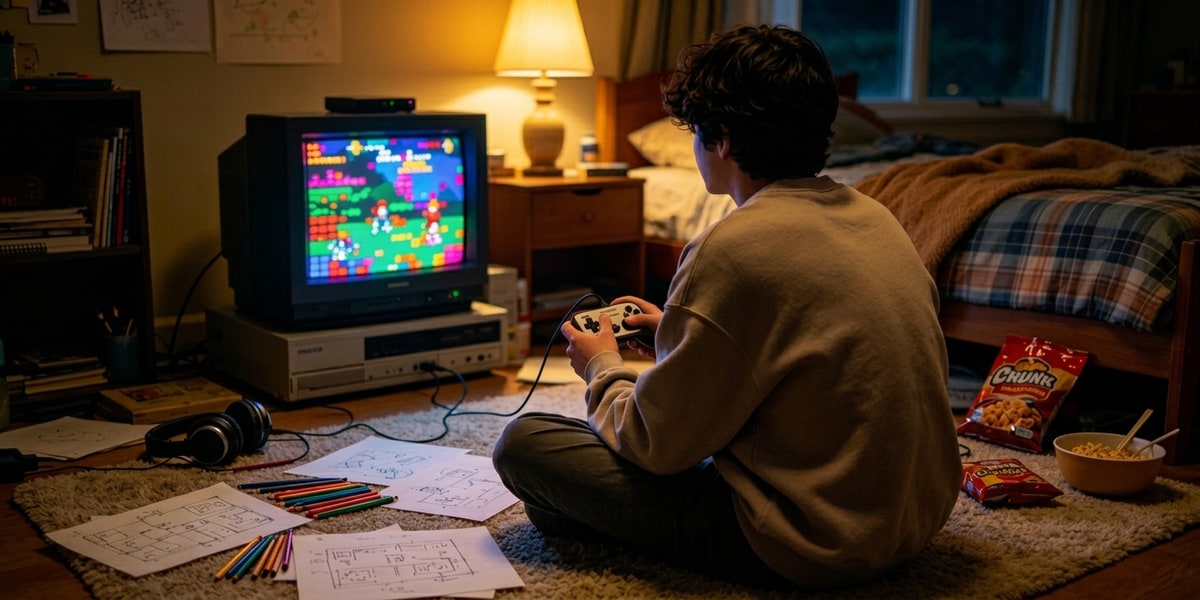
Tutorials look like the boring part of a game — the necessary chore before the real thing starts. Actually finish making one and you'll discover something surprising: tutorial design is one of the hardest problems in game development. It's where a huge share of new players quit, where reviewers form their strongest first impressions, and where designers regularly sink months of iteration before landing on something that works.
Here's why teaching a player how to play is genuinely difficult, and why the best games in the medium tend to be the ones that solve this problem invisibly.
You're teaching people who don't want to be taught
The first structural problem is motivational. Nobody buys a game to attend a lecture. Players show up wanting to play, and every second spent in explicit instruction is a second they're not doing what they came for. But you also have to teach them how the game works, because if you don't, they'll fail, get frustrated, and quit anyway.
You're stuck between two failure modes. Teach too little and the player crashes into confusion. Teach too much and the player crashes into boredom. Both lead to the same result: the game gets set aside, and the player never comes back. And the window in which this decision gets made is often the first fifteen minutes.
Every player arrives at a different level
The second problem is that your audience is not uniform. Someone who's played fifty games of your genre already knows how the camera works, how movement feels, how inventory systems are typically organized. Someone who's played five is not there yet. And someone who's played zero — often the most valuable player, because you're introducing them to a whole medium — needs a genuinely different kind of onboarding.
The player who already knows what a jump button does will feel patronized by being told. The player who doesn't will feel abandoned if you don't. And you don't get to ask them which they are, at least not directly. So a tutorial has to teach both kinds of player at once, in a way that doesn't insult the veteran or lose the newcomer. This is close to structurally impossible if you approach it the wrong way.
Skill and understanding aren't the same thing
There's a further layer. Even a player who knows what a game does mechanically might not know what to do with that knowledge. Understanding that you can dodge is different from understanding when you should dodge. Understanding that a certain item exists is different from understanding what role it plays in the broader strategy of the game.
Tutorials often fail here — they teach controls but not competence. The player finishes the tutorial able to press the buttons, but they don't yet have the internal model of the game that would help them play well. This is a genuine problem, and it's part of why some games with mechanically clean tutorials still have brutal drop-off rates a few hours in.
Why "just remove the tutorial" doesn't work
Some designers have argued for years that tutorials should be minimized or eliminated — that games should just teach through play, without any explicit instructional segments. This is a reasonable ambition and some famous games have pulled it off. But it's much harder than it sounds.
For teaching through play to work, the early game has to be built to teach. Every level, every enemy encounter, every environmental prompt has to serve two purposes at once: it has to be entertaining in its own right, and it has to be building the player's internal model of how the game works. This is a lot to ask. Games that pull this off are widely praised because pulling it off is genuinely hard.
The Mario tradition is the classic reference here. The first level of most Mario games teaches you almost everything you need to know without ever calling itself a tutorial. You encounter a mushroom, you accidentally jump on it and grow, you encounter a Goomba, you learn what happens when you touch it versus jump on it — all through play, all with no explicit instruction. This looks natural. It is not natural. It's the result of extraordinary iteration.
The best modern approach: layered onboarding
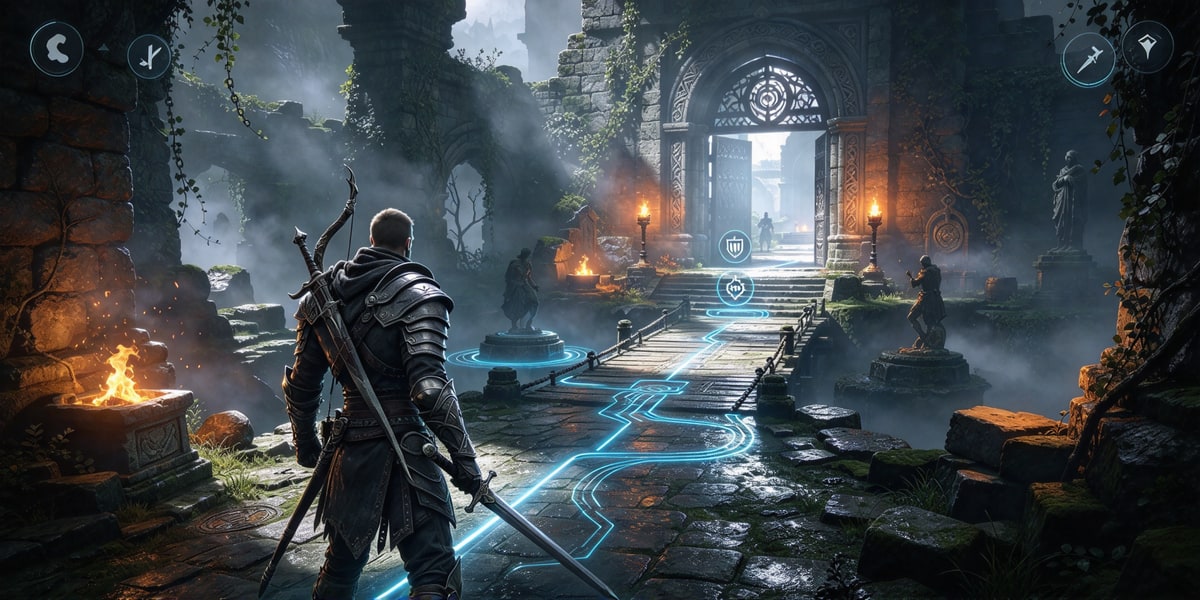
Most well-designed contemporary games handle the tutorial problem through what designers sometimes call layered onboarding. Rather than one dedicated tutorial segment at the start, the game teaches concepts gradually, over the first several hours, only when the player is actually about to need them.
You don't learn about advanced crafting until you find the first workbench. You don't learn about companion commands until a companion joins your party. You don't learn about the deep systems until they become relevant. Each concept gets introduced in the context where it makes sense, and only when the player is motivated to care.
This solves several problems at once. It reduces upfront cognitive load. It respects the player's existing knowledge. It lets the game start feeling like a game much sooner. And it teaches through action rather than through text, which is far more likely to stick.
The tradeoff is that layered onboarding is significantly more work to design. Every new mechanic has to have its own introduction sequence, its own moment of "here's when the player learns this," its own thought about pacing. It's more design labor than a single upfront tutorial. But it's noticeably better for the player, and the games that invest in it tend to be the ones people finish.
Why this problem keeps mattering
The tutorial problem hasn't gotten easier as games have gotten bigger. If anything, it's gotten harder — modern games often have significantly more systems, more mechanics, and more player options than games from twenty years ago, which means there's more to teach. The medium has grown, and the onboarding challenge has grown with it.
The tutorial is the part of the game that decides whether you'll play the rest of it. That's a lot of weight to put on a segment most players never think about consciously. When it's designed well, it disappears — you look up an hour in and realize you've already learned everything you needed to know, without ever noticing the game teaching you. That invisibility is the real craft. And it's why, quietly, tutorial design is one of the hardest problems in the medium.